
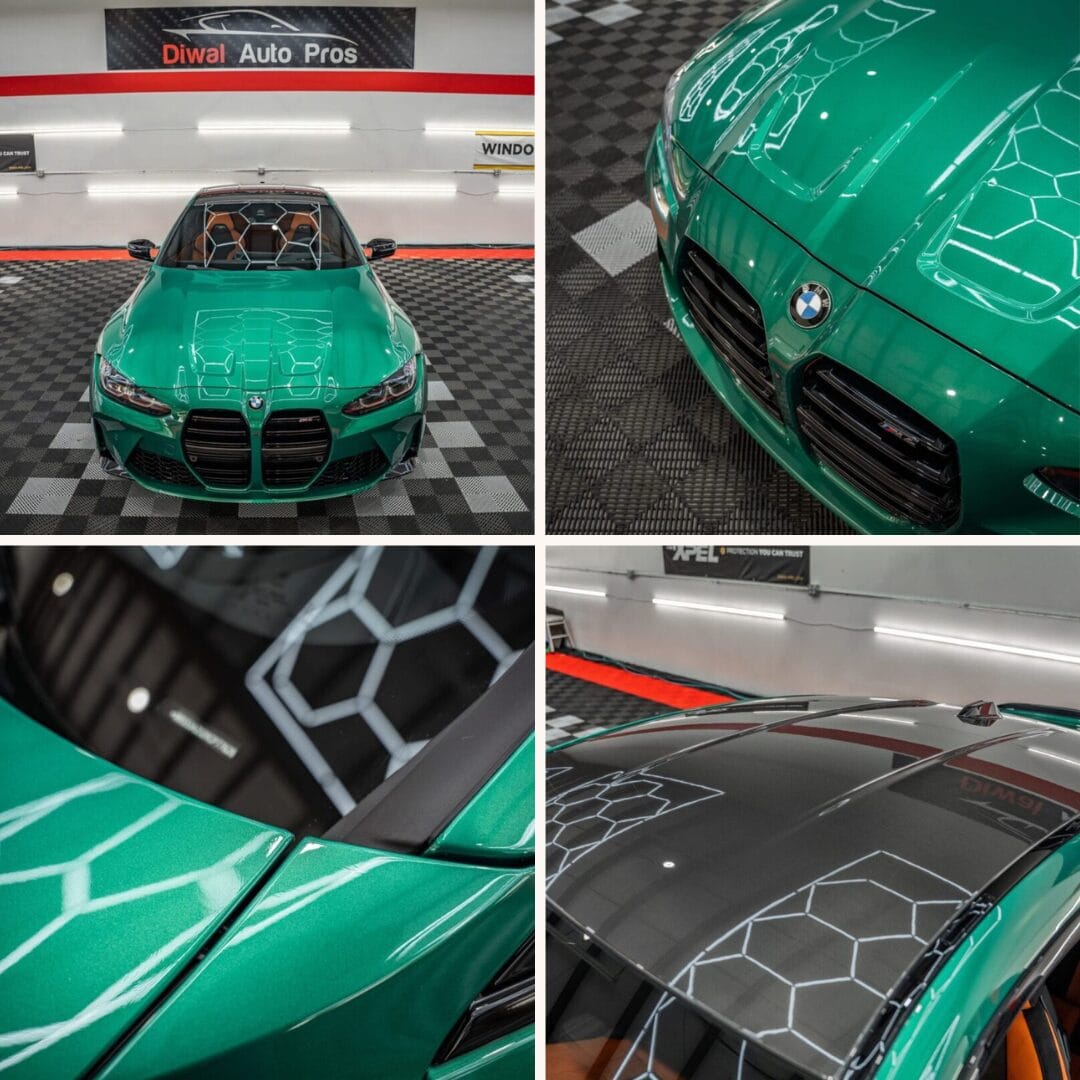
Paint protection film often shortened to PPF, has exploded in popularity, but for most drivers the first introduction feels confusing. Some people think it’s a wax, others assume it’s a vinyl wrap, and many believe it’s only for exotic cars.
In reality, PPF is simply a preventive solution. It’s designed to stop everyday damage before it happens, rather than trying to fix it after the fact. This article walks you through the basics in a clear, practical way so you can decide if it makes sense for your vehicle.
The Problem PPF Solves
Modern automotive paint looks amazing but it’s softer than older finishes due to environmental regulations. That means it scratches and chips much easier than many owners expect.
Typical damage happens fast:
- Rock chips on the highway
- Door edge marks in parking lots
- Scratches while loading groceries
- Scuffs near door handles
- Bug acids and bird droppings staining the clear coat
Most people only start thinking about protection after the first damage appears — and by then it’s permanent.
PPF exists to prevent that first mark.
So… What Exactly Is It?
Paint Protection Film is a transparent, flexible urethane layer applied over painted surfaces. Once installed, it becomes a sacrificial barrier between your paint and the outside world.
Instead of repairing paint repeatedly, the film absorbs the wear.
- You still wash your car normally.
- You still drive normally.
- You just stop damaging the paint.
Why New Owners Get Confused
The confusion usually comes from overlapping products in the detailing world:
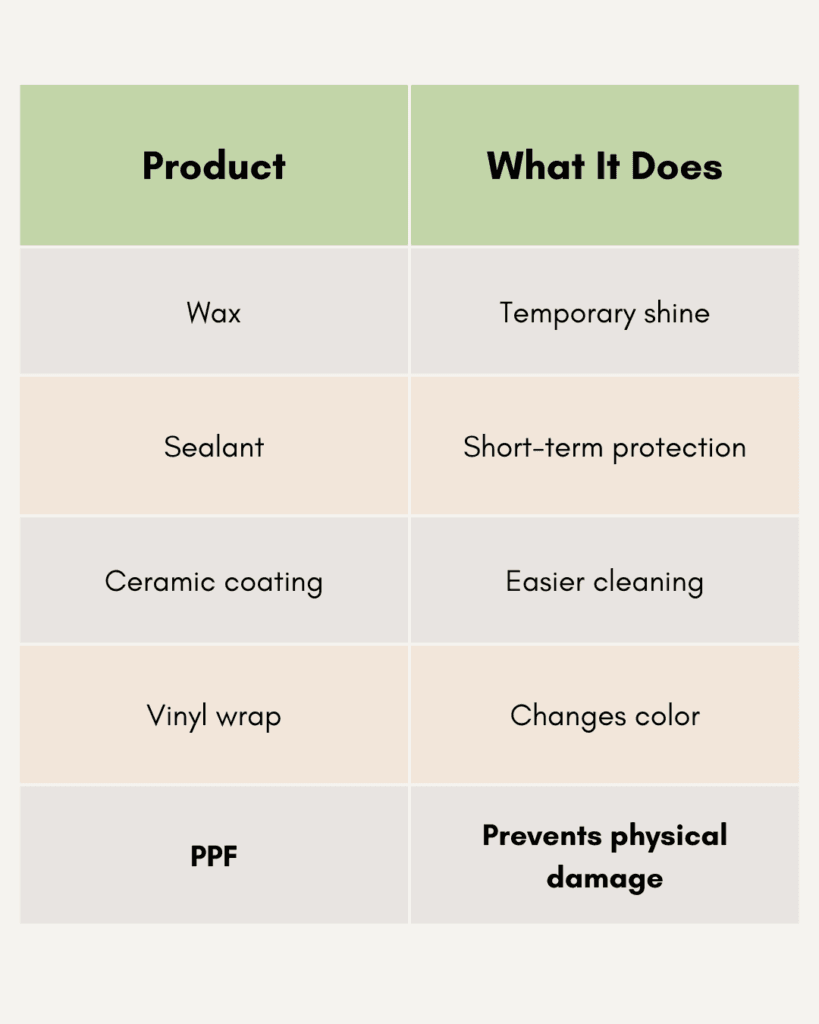
Many people expect ceramic coating to stop rock chips, it can’t.
PPF is the only option designed for impact protection.
Where Should It Be Installed?
You don’t always need the whole vehicle wrapped. Protection works best when it matches how the car is used.
Daily Driver
- Front bumper, hood edge, mirrors
- Stops most highway damage
Commuter / Family Vehicle
- Full front + door edges + trunk ledge
- Prevents loading and parking lot wear
Enthusiast or New Vehicle
- Full front or full body
- Keeps the car looking new long-term
The goal isn’t covering everything — it’s protecting what gets hit the most.
What “Self-Healing” Actually Looks Like
One of the biggest surprises after installation: small scratches disappear.
When the film warms in the sun or with warm water, light wash marks fade away. You’re not constantly polishing the paint anymore because the scratches never reach it.
This doesn’t mean the film is invincible — sharp impacts still leave marks — but the daily wear most cars suffer simply doesn’t accumulate.
Does It Change the Appearance?
A proper installation shouldn’t make your vehicle look wrapped.
Instead, most owners notice:
- More consistent gloss
- Fewer visible swirls
- Cleaner appearance longer after washing
The paint underneath stays preserved rather than slowly dulling over time.
How Long It Lasts
Quality film is built for years, not months. With normal driving and basic care, most installations protect vehicles for many years before replacement is needed.
The important detail: The film ages — not your paint.
The Real Difference You Notice
Before protection:
You wash → it looks good → damage returns
After protection:
You wash → it stays good
That’s the biggest shift. Maintenance becomes about cleaning instead of correcting.
Who Usually Benefits Most
PPF isn’t about the type of car — it’s about how you use it.
It’s ideal for people who:
- Keep vehicles long term
- Drive highways often
- Park in public areas
- Have darker paint colors
- Want resale value preserved
- Just bought a new car
Even practical daily vehicles gain the most because they see the most exposure.
Common Misconception: “I’ll Just Fix the Paint Later”
Paint correction removes a microscopic layer of clear coat every time it’s polished. After enough repairs, repainting becomes the only option — and repainted panels rarely match factory finish perfectly.
PPF flips the strategy: Instead of repeatedly repairing damage, you prevent it once.
Most drivers don’t realize how quickly normal use slowly ages paint until it’s noticeable and permanent. Paint protection film isn’t about perfection or luxury, it’s about keeping your vehicle looking the same years from now as it did the day you first walked up to it.
Diwal Auto Pros
11482 Columbia Park
Jacksonville, FL 32258
📞 Call today to schedule an appointment
📩 Contact us for a free PPF quote
Protect once — preserve for years. — Diwal Auto Pros.