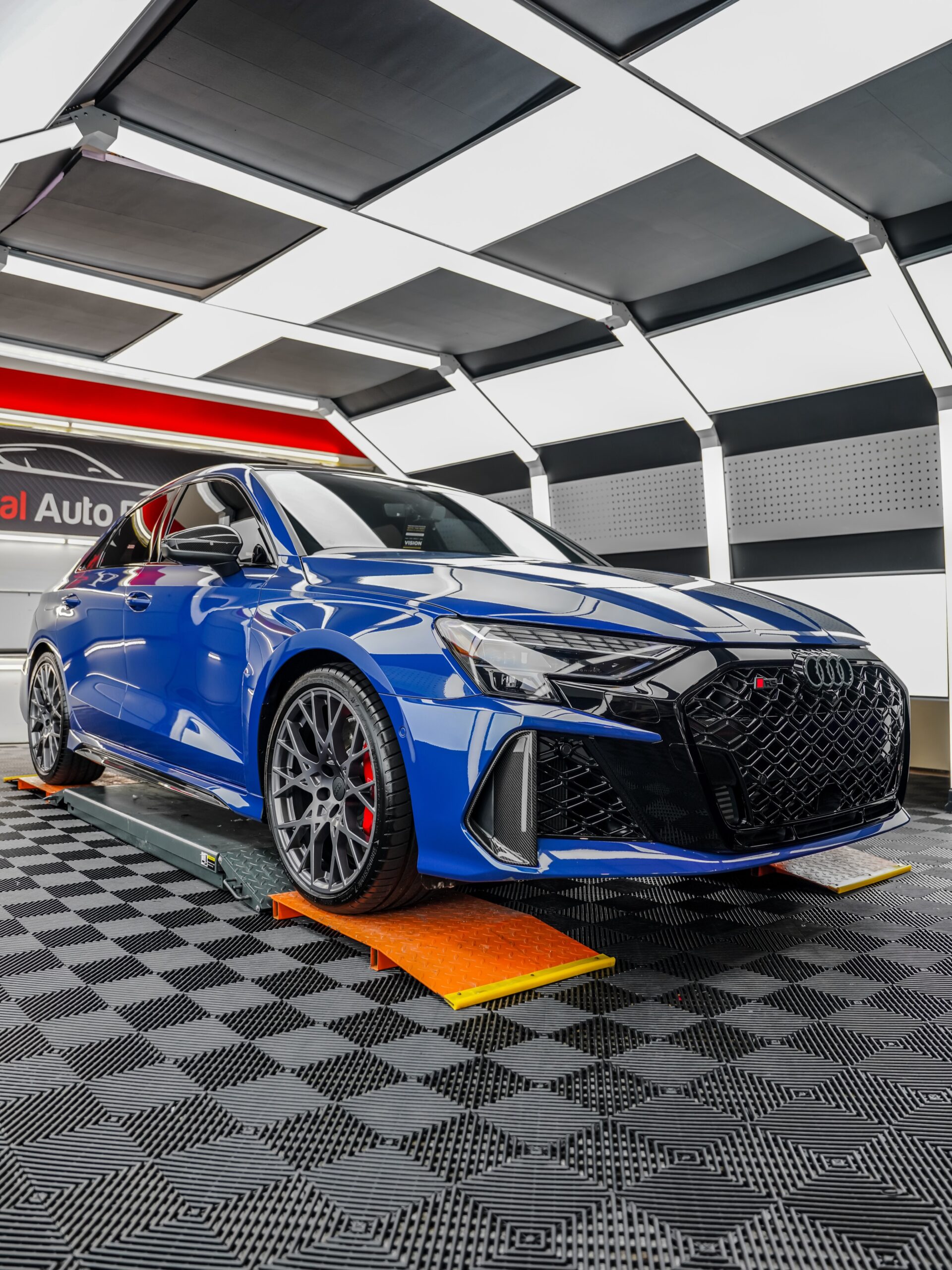
The Audi RS3 does not look like an ordinary sedan.
The wide grille, sharp lower intakes, flared fenders, and low stance make it clear this car was built for drivers who enjoy every mile. It is compact, quick, and easy to live with every day.
That everyday usability is part of the appeal. It is also part of the problem.
An RS3 that gets driven often will collect rock chips, scratches, and road residue much faster than a car that only leaves the garage on weekends. And the front end, the part that gives the RS3 so much of its character, is usually the first place damage shows up.
At Diwal Auto Pros, we install paint protection film to help Audi owners keep that aggressive front end looking sharp without changing the way the car looks.
A Low Front End Meets the Road First
The RS3 sits low, and its front bumper is shaped with deep openings and detailed edges.
That design looks great, but it also puts the paint closer to everything kicked up by the vehicle ahead. On Jacksonville highways, that can mean:
- Loose gravel from construction zones
- Sand blown across the road
- Small rocks thrown by trucks
- Bug impacts at highway speed
- Debris from road shoulders
- Tar and grime from fresh pavement
A single drive may not seem like much. A year of commuting can leave the bumper, hood edge, and mirrors covered in small chips that are difficult to ignore.
What PPF Actually Does
Paint protection film is a clear urethane layer applied directly over painted surfaces.
It is designed to take the impact before the paint does. When a small stone strikes the front of your RS3, the film absorbs that hit instead of the clear coat.
Quality PPF can also help with:
- Light scratches from everyday contact
- Bug residue sitting directly on the paint
- Bird droppings and environmental contamination
- Minor scuffs near door handles and edges
- Staining on lower panels
It does not change the color of the car. When installed properly, it should be very difficult to notice at all.
The Areas Most RS3 Owners Protect First
Not every owner needs full-body coverage on day one.
Many RS3 drivers start with the areas that take the most abuse:
- Full front bumper
- Full hood
- Front fenders
- Side mirrors
- Headlights
- Rocker panels
These panels face the road directly, so they tend to show wear first. For owners who want the entire car covered, full-body PPF is also an option.
We talk through how you drive the car before recommending coverage. A daily commuter on I-95 has different needs than a weekend car that rarely leaves town.
Small Details Matter on an Audi
Audi designs are known for clean lines and tight panel gaps.
That means poor PPF work is easy to spot. Visible seams, uneven edges, lifted corners, and trapped debris can take away from the finish you are trying to protect.
Our installation process focuses on:
- Careful surface preparation before the film goes on
- Clean, consistent edges
- Coverage that follows the shape of each panel
- Attention around sensors, emblems, and trim
- Final quality-control checks
When appropriate, certain components may be carefully addressed to create a more seamless result. The goal is protection that looks like it belongs on the car.
PPF and Ceramic Coating Work Well Together
PPF and ceramic coating solve different problems.
PPF is the physical barrier. It helps absorb chips and light scratches.
Ceramic coating adds a slick, glossy layer that makes washing easier and helps dirt release from the surface more easily.
Many RS3 owners combine both. The film protects the high-impact areas, and the coating helps the entire car stay easier to maintain.
Why Sooner Is Better
PPF protects the paint underneath it. It does not repair damage that is already there.
If chips have already formed on the bumper or hood, they will still be visible under the film. That is why the best time to install PPF is while the paint still looks the way you want it to look.
For a newer RS3, that usually means right after delivery.
For an older one, we can inspect the paint and talk about whether any correction makes sense before protection.
Jacksonville Roads Add Their Own Challenges
Florida driving brings a mix of conditions that can wear down paint faster than many owners expect.
Sand drifts onto roads near the coast. Summer storms wash debris onto the pavement. Construction projects leave gravel along entrance ramps. And from late summer into fall, bugs can cover the front of a car after a single evening drive.
For an RS3 that sees regular use, those conditions add up quickly.
PPF gives that contamination something to land on besides the clear coat. And because the film sits between the road and the paint, cleaning the front end becomes less stressful. You are wiping the film, not the factory finish.
What Happens After Installation
Our work does not end when the last piece of film is placed.
After installation, the film needs time to settle. Small amounts of moisture under the film can take a few days to evaporate, and that is a normal part of the process.
We perform quality-control checks before the car leaves the shop and offer a post-installation checkup so the film can be inspected once it has settled. We also explain how to wash the car during the first days and what products to avoid.
That way, your RS3 leaves with protection that has been installed and finished correctly.
Drive Your RS3 the Way It Was Meant to Be Driven
You did not buy an RS3 to baby it.
The car was built to be enjoyed on the highway, on back roads, and in everyday traffic. PPF lets you do that while giving the paint a better chance of staying clean and chip-free.
Ready to Protect Your RS3?
Our team can walk you through coverage options and help you choose the right level of protection for the way you drive.
Diwal Auto Pros
11482 Columbia Park
Jacksonville, FL 32258
📞 Call today to schedule an appointment
📩 Contact us for a free PPF quote
Your RS3 was built to be driven. Make sure the paint is ready for it.